WARRIOR · EDO · c. 1584–1645
Miyamoto Musashi
Swordsman, strategist, painter. He fought more than sixty duels and never lost — by his own account. He wrote it all down in a cave, two years before he died.
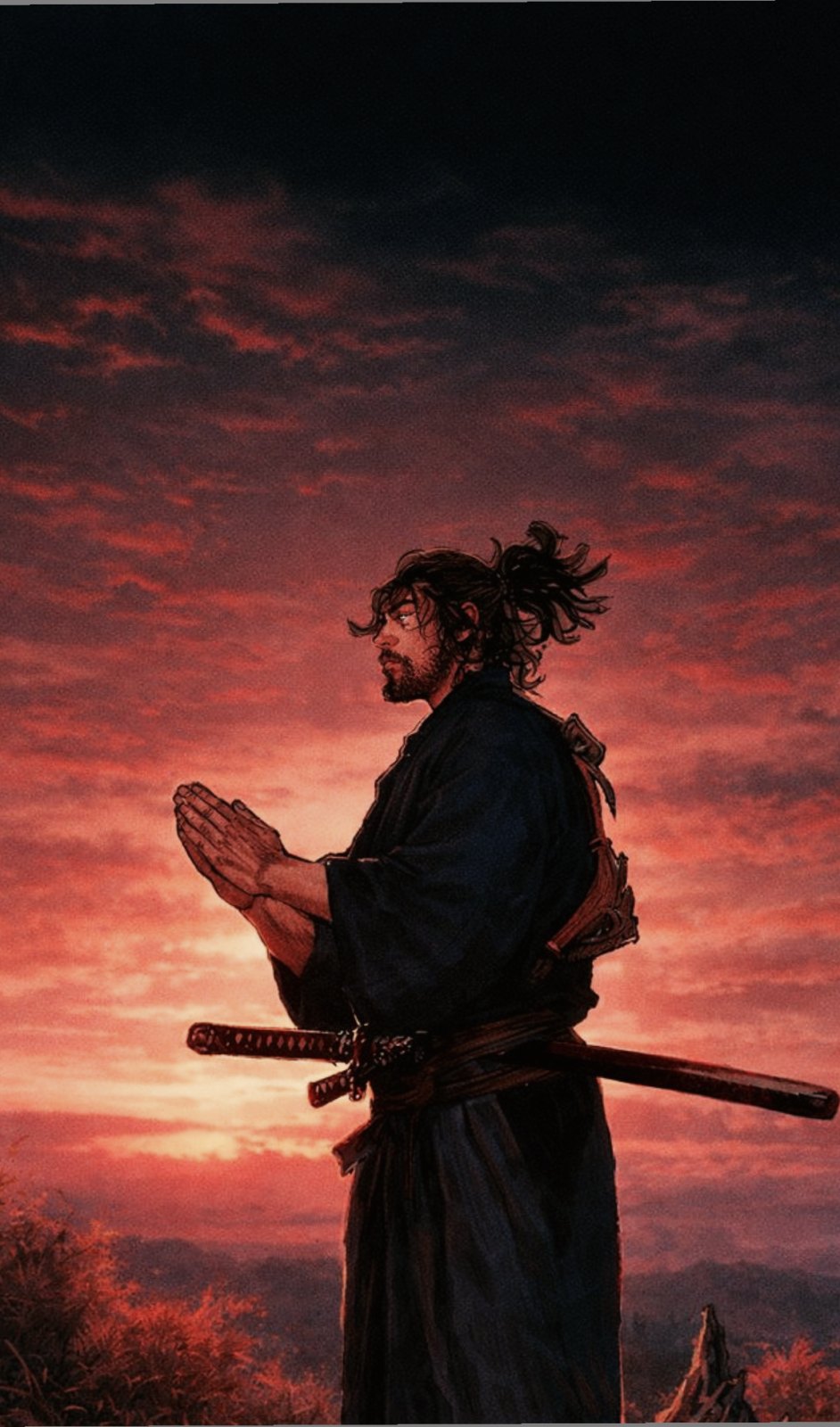
WHY WE HONOUR MUSASHI
Not just a swordsman.
Miyamoto Musashi spent sixty years making himself impossible to defeat — not by talent, but by refusal to stop. He trained in the cold, fought in wars he had no stake in, and when he finally sat down to write, he gave the world a book that has not aged a day.
We honour him here not for the kills, but for the discipline, the art, and the honesty. He admitted when things were uncertain. He painted birds. He wrote rules for himself, not for posterity.
That combination — fighter, artist, writer, loner — is what we find extraordinary. We hope this page does it justice.
— The Bushidō Library
SEVEN MOMENTS
Seven ways to see him
Artists' interpretations, not historical likenesses. Credits below each image.
KEY HIGHLIGHTS
Six things to know
Two swords at once
Musashi taught fighting with the long and short sword held together, one in each hand. His school became known as Niten Ichi-ryū, and its lineage is still taught today.
"More than sixty" contests
In the Book of Five Rings he writes that he fought more than sixty times, from age thirteen to about twenty-nine, and never lost. No independent record covers every one.
The duel at Ganryūjima
His duel with a swordsman remembered as Sasaki Kojirō, traditionally dated 1612, is his most famous fight. The vivid details — like the wooden sword carved from an oar — come from later accounts.
The painter
Musashi was also an ink painter and calligrapher. His "Shrike on a Withered Branch" is protected in Japan as an Important Cultural Property.
The cave of Reigandō
In 1643, under the patronage of the Hosokawa lords of Kumamoto, he withdrew to the Reigandō cave to write. He finished the Book of Five Rings two years later.
The Path of Walking Alone
Days before his death he wrote the Dokkōdō — twenty-one short rules for living — such as not regretting what you have done.
HIS LIFE
Nine stops on the road
Born in western Japan
Musashi was born around 1584, judging from his own statement that he was sixty in 1643. Whether he was born in Harima or Mimasaka province is still debated.
Source: Gorin no sho (1645); later biographies differ
THE BOOK OF FIVE RINGS · 五輪書
Gorin no Sho
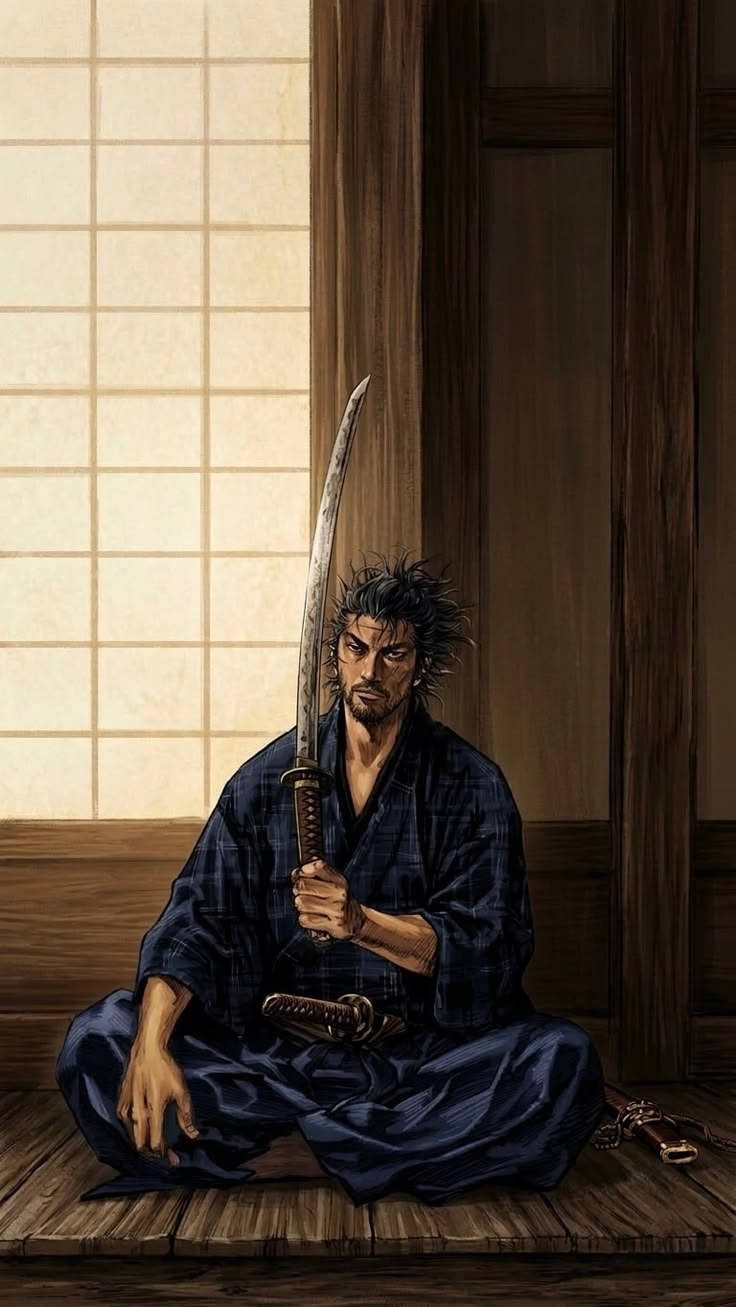
地之巻
Chi no maki
SCROLL 1 OF 5
Earth
The foundation. Musashi introduces his school and his view of strategy, comparing the strategist to a master carpenter. He opens with his own life story and closes with nine rules for anyone who wants to learn his way.
Strategy is a craft that must be learned as a whole, from the ground up.
Image: [CONFIRM ARTIST]
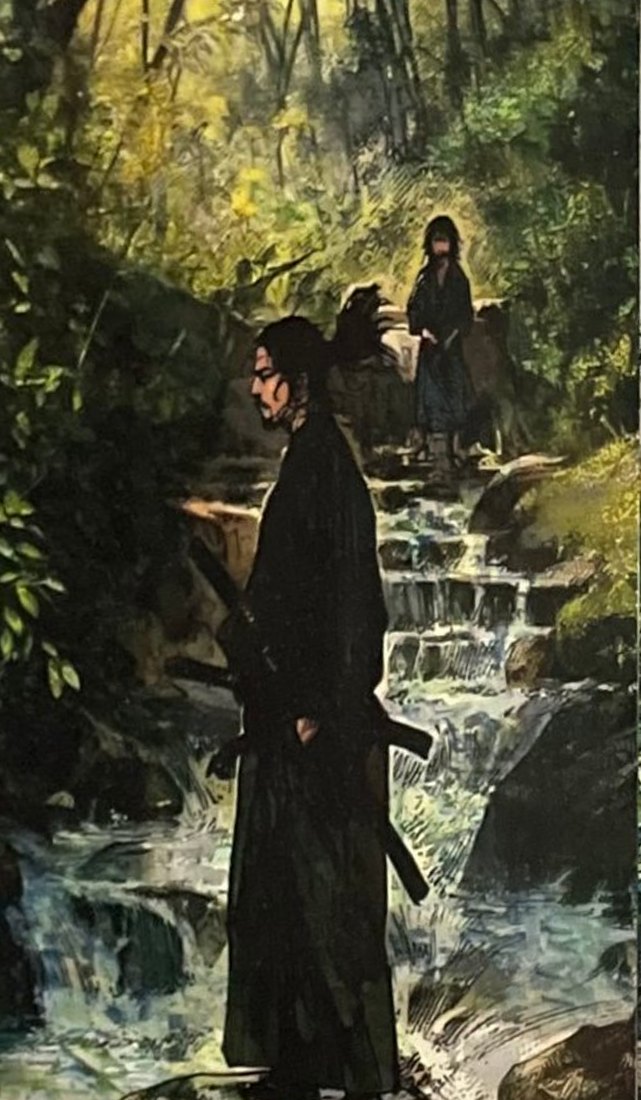
水之巻
Sui no maki
SCROLL 2 OF 5
Water
The core technique: a calm and flexible mind like water. Posture, the way of looking, how to hold the sword, footwork and the five basic guards. This cannot be learned by reading alone, only by practice.
Keep the mind steady and flexible; train until technique becomes natural.
Image: Takehiko Inoue, Vagabond
火之巻
Ka no maki
SCROLL 3 OF 5
Fire
Fighting itself. Taking the initiative, reading the opponent, using light and ground to your advantage. A duel between two people and a battle between armies are the same principle at different scales.
The principles that win one contest also win many.
Image: [CONFIRM ARTIST]
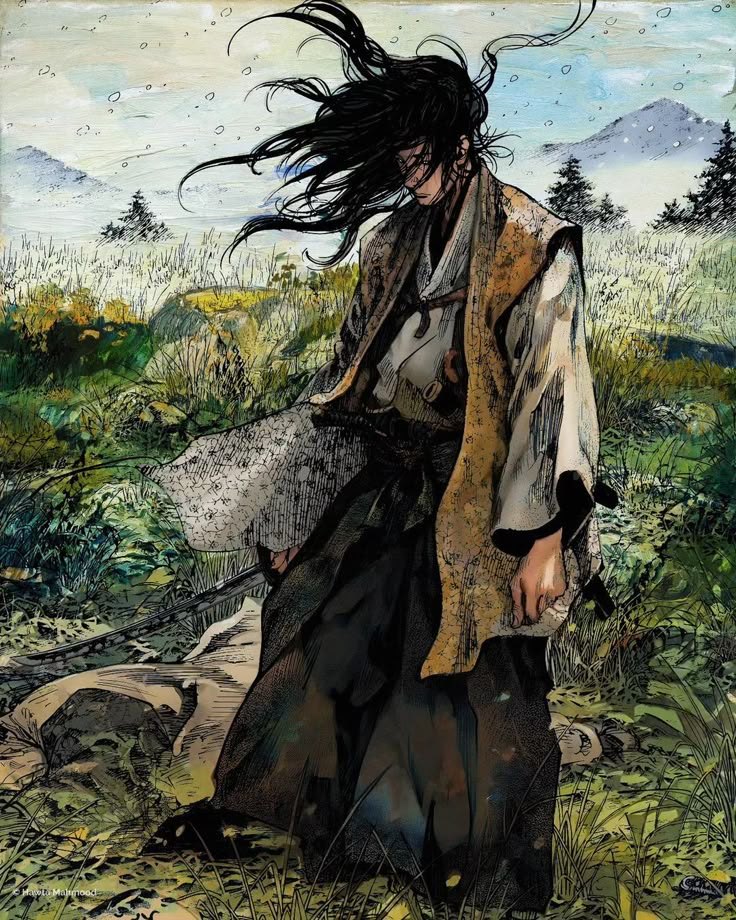
風之巻
Fū no maki
SCROLL 4 OF 5
Wind
Other schools. "Wind" means style or tradition: he examines other schools, their love of very long swords or fixed stances, and explains where he believes they go wrong.
Know other ways clearly, so that you understand your own.
Image: Takehiko Inoue, Vagabond · colour by Hawbi Mahmood
空之巻
Kū no maki
SCROLL 5 OF 5
Void
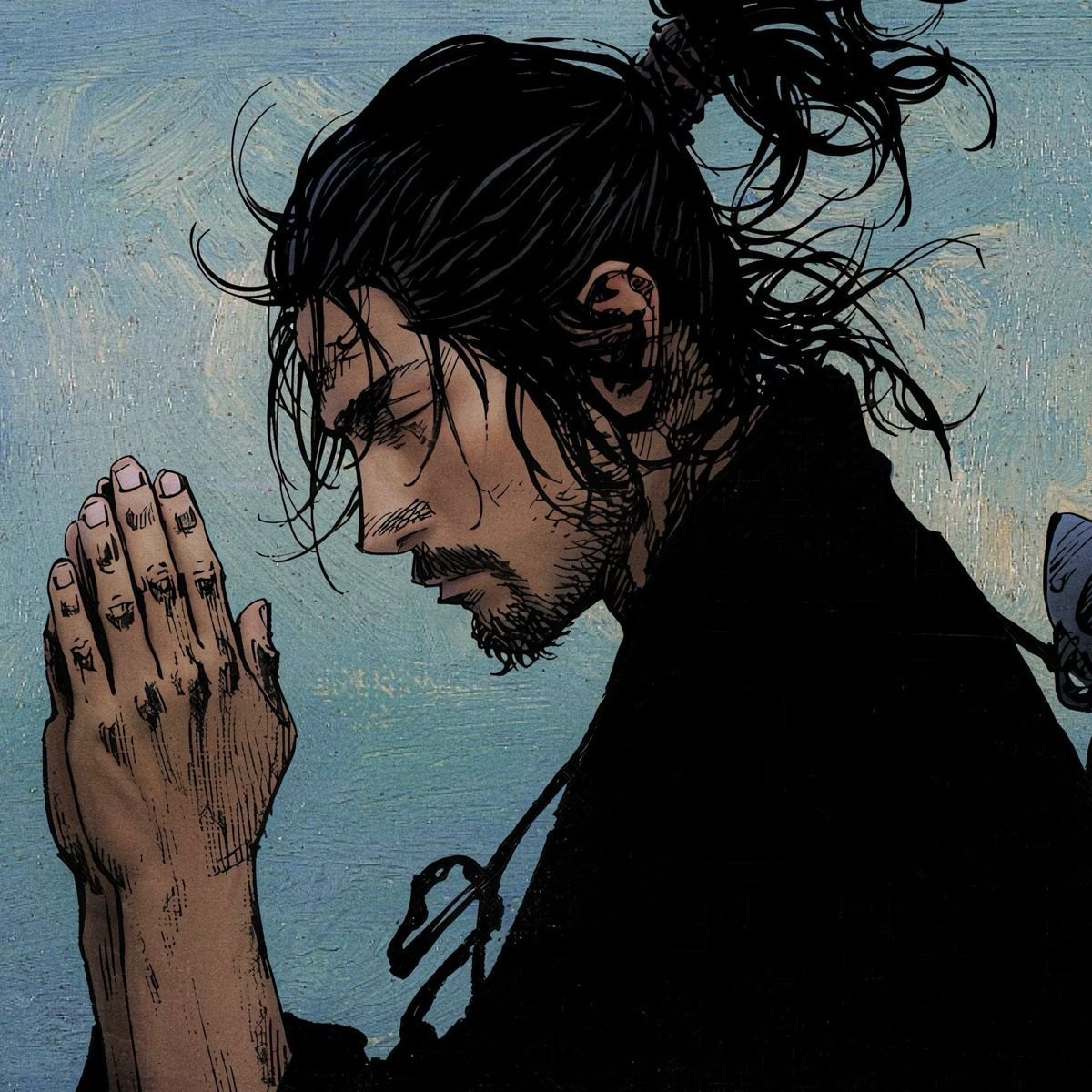
The shortest scroll. A state beyond doubt and confusion that he reaches only after long practice, where the way is understood without needing to think about it.
Practise until doubt clears and the way becomes your own.
Image: Takehiko Inoue, Vagabond
IN HIS WORDS
HISTORY VS LEGEND
What the evidence says
| Story | Verdict | What the evidence says |
|---|---|---|
| He was never defeated | His claim | Comes from Musashi himself in the Book of Five Rings. There is no independent record of every contest. |
| The oar sword and arriving late at Ganryūjima | Later detail | These details appear in biographies written more than a century later, such as the Nitenki (1776). |
| Sasaki Kojirō's name, age and long sword | Uncertain | The early sources call his opponent "Ganryū". His full name, age and history are uncertain. |
| He fought at Sekigahara in 1600 | Uncertain | Often repeated, but historians debate whether he was there, and on which side. |
| The famous "Musashi" of novels and films | Fiction | Much of the popular picture comes from Yoshikawa Eiji's 1930s novel and the films and manga it inspired. |
Key sources
- Musashi, Gorin no sho (Book of Five Rings), 1645. Trans. Victor Harris (Overlook Press).
- Musashi, Dokkōdō, 1645. Trans. William Scott Wilson.
- Kokura memorial (Kokura hibun), 1654. Inscribed by Terao Magonojō.
- Nitenki, 1776. Later biography, used with caution for legendary details.
- Kenji Tokitsu, Miyamoto Musashi: His Life and Writings (Shambhala, 2004).